
Introduction
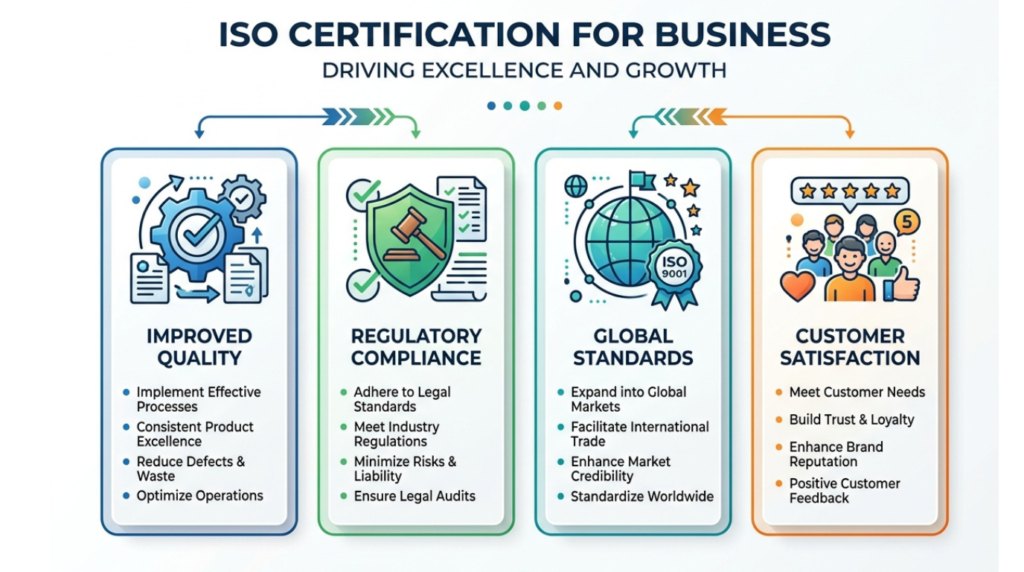
business environment, customers expect quality, consistency, and professionalism from every company they deal with. Whether you run a startup, manufacturing unit, service company, or small business, building customer trust and maintaining quality standards are essential for long-term success. This is where ISO certification becomes highly valuable. The benefits of ISO certification for business go far beyond just getting a certificate. ISO certification helps businesses improve operational efficiency, enhance customer satisfaction, strengthen brand reputation, and create new growth opportunities in domestic and international markets. Many businesses today use ISO certification as a powerful tool to stand out from competitors and establish credibility. From better management systems to increased business opportunities, ISO standards can transform the way your organization operates. In this detailed guide, we will explain the major benefits of ISO certification for business, why it matters, and how it can help your company grow faster and more efficiently. One of the most effective ways to achieve this is through ISO certification, which is a globally recognized standard that ensures a company meets specific quality, safety, and efficiency benchmarks. ISO (International Organization for Standardization) certification is not limited to large corporations; it is equally beneficial for small and medium-sized enterprises aiming to build a strong reputation in their industry. By obtaining ISO certification, businesses demonstrate their commitment to delivering consistent quality and maintaining high operational standards, which plays a crucial role in long-term growth and sustainability.
What is ISO Certification?
ISO Certification is an official recognition that a business or organization complies with international standards set by the International Organization for Standardization (ISO). These standards are designed to ensure that products, services, and systems are safe, reliable, and of consistent quality. ISO itself does not issue certifications; instead, independent certification bodies audit businesses and verify whether they meet the required standards. Once a company successfully passes the audit, it is awarded an ISO certificate, which proves that it follows globally accepted best practices in its operations. ISO certification covers various aspects of a business, including quality management, environmental responsibility, information security, and workplace safety. For example, ISO 9001 focuses on quality management systems, ISO 14001 deals with environmental management, and ISO 27001 is related to information security. By implementing these standards, businesses can improve their internal processes, reduce errors, and deliver better results to customers. This structured approach helps organizations maintain consistency and efficiency in their daily operations. For businesses, especially small and medium enterprises, ISO certification is more than just a certificate—it is a mark of credibility and professionalism. It shows customers, clients, and partners that the company is committed to maintaining high standards.
Benefits of ISO Certification for Business
1. Improves Business Credibility
One of the biggest benefits of ISO certification for business is enhanced credibility. Customers trust businesses that follow internationally recognized quality standards.
ISO certification shows that your company:
- Maintains quality standards
- Follows proper business procedures
- Delivers reliable products and services
- Values customer satisfaction
This creates a positive impression among customers, investors, suppliers, and business partners.
2. Enhances Customer Satisfaction
Customer satisfaction is essential for business growth. ISO certification helps companies improve product and service quality through structured processes and continuous monitoring.
How ISO Improves Customer Experience:
- Better quality control
- Reduced product defects
- Faster issue resolution
- Consistent service delivery
- Improved communication
Satisfied customers are more likely to become repeat buyers and recommend your business to others.
3. Increases Operational Efficiency
ISO certification encourages businesses to streamline their internal operations and reduce inefficiencies.
Operational Benefits Include:
- Better workflow management
- Reduced wastage
- Improved productivity
- Clear employee responsibilities
- Faster problem-solving
4. Helps Win More Business Opportunities
Many government departments, multinational companies, and large corporations prefer working with ISO-certified businesses.
ISO certification can help your business:
- Qualify for government tenders
- Win large contracts
- Expand into international markets
- Build partnerships with reputed companies
For many industries, ISO certification has become a competitive necessity.
5. Builds Strong Brand Reputation
A certified business is often viewed as more professional and trustworthy.
Displaying ISO certification on:
- Business websites
- Marketing materials
- Product packaging
- Company profiles
helps strengthen your brand image and attract more customers.
6. Improves Product and Service Quality
ISO standards focus heavily on maintaining consistency and quality.
Key Quality Benefits:
- Standardized production processes
- Reduced errors and defects
- Better quality assurance
- Improved service delivery
Consistent quality helps businesses build long-term customer relationships.
7. Supports International Business Expansion
ISO certification is recognized worldwide. Businesses planning to export products or expand globally can benefit greatly from certification.
International Benefits:
- Increased trust among global buyers
- Easier export opportunities
- Better international partnerships
- Improved global market access
8. Better Risk Management
ISO-certified organizations use proper documentation and management systems to identify and control risks effectively.
Risk Management Advantages:
- Reduced operational risks
- Better compliance management
- Improved data security
- Fewer legal complications
9. Increases Employee Productivity
Employees work more efficiently when systems and responsibilities are clearly defined.
ISO certification promotes:
- Proper employee training
- Clear communication
- Defined work processes
- Improved workplace culture
A productive workforce directly contributes to business growth.
10. Encourages Continuous Improvement
Continuous improvement is one of the core principles of ISO standards.
Businesses regularly review:
- Performance metrics
- Customer feedback
- Operational systems
- Quality standards
This helps organizations adapt to changing market conditions and improve continuously.
11. Competitive Advantage in the Market
The market is highly competitive, and businesses need ways to stand out.
ISO certification gives businesses an advantage because customers often prefer certified companies over non-certified competitors.
Why Customers Prefer ISO-Certified Businesses:
- Better quality assurance
- Professional systems
- Reliable services
- International standards
This can increase customer confidence and improve conversion rates.
12. Easier Compliance with Government Regulations
ISO-certified businesses usually maintain proper documentation and operational procedures, making regulatory compliance easier. This reduces:
- Compliance risks
- Legal penalties
- Documentation issues
Businesses become more organized and audit-ready.
Industries That Benefit from ISO Certification
The benefits of ISO certification for business apply to almost every industry.
Industries Include:
- Manufacturing
- Information Technology
- Construction
- Healthcare
- Food Industry
- Education
- Logistics
- Consultancy Services
- E-commerce
- Startups and SMEs
Both small and large businesses can benefit from ISO standards.
Why Choose Complete Taxation for ISO Certification?
Getting ISO certification can sometimes feel complicated, especially for startups and small businesses. This is where Complete Taxation can help simplify the entire process.
Benefits of Choosing Complete Taxation
1. Expert Guidance
Experienced professionals help you understand the complete ISO certification process.
2. Fast Processing
Quick documentation and efficient registration support save time.
3. Affordable Pricing
Cost-effective ISO certification services for startups and businesses.
4. End-to-End Support
From documentation to final certification assistance, Complete Taxation provides complete support.
5. Business Compliance Expertise
Apart from ISO registration, they also assist with:
- GST Registration
- MSME Registration
- Company Registration
- Income Tax Filing
Visit the official website:
Complete Taxation Official Website
Search on Google:
Search Complete Taxation on Google
Conclusion
Moreover, ISO certification significantly enhances a company’s credibility in the eyes of customers, partners, and stakeholders. In a market where trust plays a crucial role in decision-making, being ISO certified acts as a strong signal of professionalism and commitment to excellence. It reassures clients that the business follows strict quality control measures and adheres to global best practices. This trust not only helps in retaining existing customers but also attracts new ones, ultimately leading to increased business opportunities. Additionally, many government tenders, corporate contracts, and international deals require ISO certification, making it a gateway to larger markets and higher growth potential. Another important aspect of ISO certification is its focus on continuous improvement. Businesses are encouraged to regularly evaluate their performance, identify gaps, and implement better strategies to enhance productivity and customer satisfaction. This ongoing process ensures that the organization remains adaptable and competitive in a constantly evolving market. It also fosters a culture of accountability and efficiency among employees, leading to better teamwork, improved performance, and a more structured work environment. For small businesses, startups, freelancers, and established enterprises alike, ISO certification provides a clear roadmap for growth and excellence. It helps in building a strong brand image, gaining a competitive advantage, and establishing long-term credibility in both domestic and international markets. While the certification process may require time, effort, and proper planning, the long-term benefits far outweigh the initial investment.
FAQs
1. What are the main benefits of ISO certification for business?
ISO certification improves business credibility, customer trust, operational efficiency, and market opportunities.
2. Is ISO certification mandatory for businesses?
No, ISO certification is generally voluntary, but many companies and tenders prefer ISO-certified businesses.
3. Which ISO certification is best for small businesses?
ISO 9001 is one of the most popular certifications for quality management and is suitable for most small businesses.
4. Can startups apply for ISO certification?
Yes, startups and small businesses can apply for ISO certification to improve credibility and business growth.
5. How long does ISO certification take?
The process duration depends on the business type and documentation readiness, but it usually takes a few weeks.
To learn more about expert taxation services, visit our website at https://completetax.in/
Or simply search ‘Complete Taxation’ on Google to find us easily.
Recent Post


How a Website Boosts Business Credibility (And Why It Matters for New Businesses)
26 September 2026
No Comments
Read More »

Accounting and GST Compliance for Startups: A Complete Guide
26 September 2026
No Comments
Read More »

Input Tax Credit Under GST: Eligibility, Rules, Blocked Credits and Claim Process
21 September 2026
No Comments
Read More »

OPC Registration in India: Eligibility, Documents, Process and Compliance Guide
21 September 2026
No Comments
Read More »

GST Composition Scheme: Eligibility, Tax Rates & How to Opt In
16 September 2026
No Comments
Read More »

Sole Proprietorship Registration in India: A Complete Guide for First-Time Owners
15 September 2026
No Comments
Read More »