
Introduction
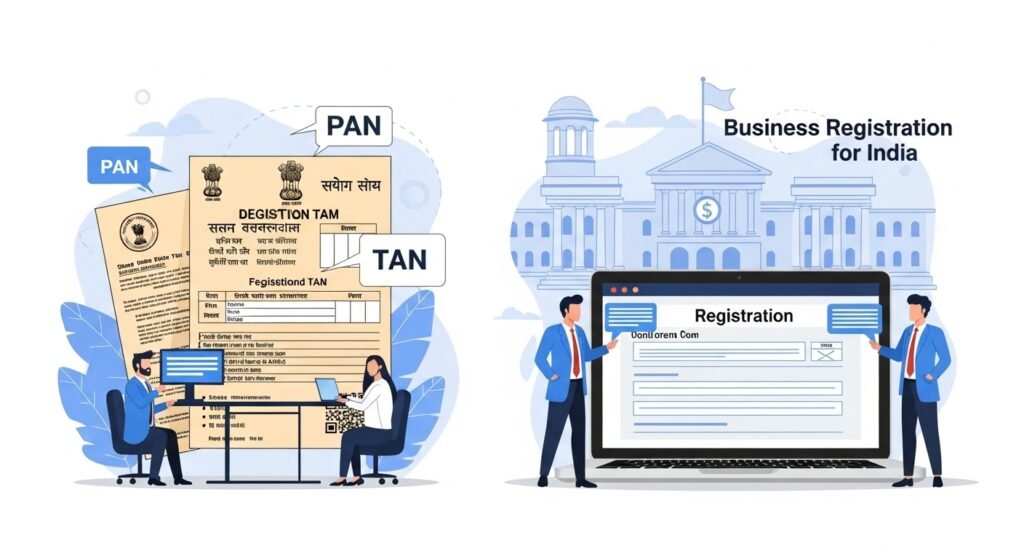
In the Indian regulatory framework, obtaining a Permanent Account Number (PAN) and Tax Deduction and Collection Account Number (TAN) is fundamental for establishing and operating a compliant business. These identifiers, issued by the Income Tax Department, serve distinct yet interrelated purposes in taxation and financial reporting.This article provides a comprehensive overview of PAN and TAN, along with practical insights into professional service support.In today’s increasingly regulated and digitized business environment, having PAN and TAN is not just a statutory obligation but also a strategic necessity. These identifiers facilitate seamless interaction with government portals, enable accurate tax reporting, and help avoid penalties associated with non-compliance. Moreover, they contribute to building a trustworthy business profile, which is essential for securing loans, attracting investors, and establishing long-term partnerships.This comprehensive guide will provide an in-depth understanding of PAN and TAN, covering their importance, differences, application procedures, legal requirements, and best practices for compliance. Whether you are a startup founder, small business owner, or corporate entity, gaining clarity on these fundamental aspects will help you lay a strong and compliant foundation for your business in India.Issued by the Income Tax Department of India, PAN is a ten-digit alphanumeric number that serves as a universal identification for all taxpayers, including individuals, companies, and partnership firms.
Legal Framework and Applicability
- PAN is governed under Section 139A of the Income Tax Act, 1961
- TAN is mandated under Section 203A of the Income Tax Act, 1961
All business entities are required to obtain PAN, whereas TAN is applicable where Tax Deducted at Source (TDS) or Tax Collected at Source (TCS) provisions are triggered.
Permanent Account Number (PAN)
The Permanent Account Number (PAN) is a unique identifier used for tracking financial transactions and ensuring tax compliance.The Permanent Account Number (PAN) is one of the most important identification tools in India’s financial and taxation system. Issued by the Income Tax Department of India, PAN is a unique 10-character alphanumeric code assigned to individuals, businesses, and other entities. For businesses, PAN is not just a regulatory requirement—it is the foundation for conducting financial transactions, filing taxes, and maintaining legal compliance.
- Filing income tax returns
- Opening business bank accounts
- GST registration
- Financial transparency and reporting
Tax Deduction and Collection Account Number (TAN)
The Tax Deduction and Collection Account Number (TAN) is required for entities responsible for deducting or collecting tax at source.The Tax Deduction and Collection Account Number (TAN) is a crucial requirement for businesses in India that are responsible for deducting or collecting tax at source. Issued by the Income Tax Department of India, TAN is a unique 10-digit alphanumeric number that must be obtained by all entities involved in TDS (Tax Deducted at Source) or TCS (Tax Collected at Source) transactions.For businesses, TAN is not just a compliance formality—it is essential for managing tax deductions, filing returns, and avoiding penalties under the Income Tax Act.
- Filing TDS/TCS returns
- Issuing TDS certificates
- Ensuring compliance with withholding tax provisions
Strategic Importance of PAN and TAN in Business Operations
From a regulatory and financial standpoint, obtaining a Permanent Account Number (PAN) and Tax Deduction and Collection Account Number (TAN) is not merely a statutory requirement but a strategic necessity. These identifiers enable businesses to establish credibility with financial institutions, vendors, and government authorities. A properly registered entity with valid PAN and TAN demonstrates transparency and enhances trust in commercial transactions.
Role in Financial Transparency and Audit Readiness
PAN plays a critical role in maintaining a comprehensive record of financial transactions, which is essential during audits and assessments conducted by the Income Tax Department. Similarly, TAN ensures that all tax deductions at source are accurately reported and reconciled. Proper usage of these identifiers simplifies audit procedures and minimizes the risk of discrepancies or regulatory scrutiny.
Integration with Other Regulatory Registrations
PAN is a foundational requirement for several other registrations, including GST, import-export licensing, and banking compliance. Without a valid PAN, businesses may face significant operational constraints. TAN, on the other hand, becomes essential when integrating payroll systems and vendor payment structures, particularly where TDS compliance is applicable. Together, they form the backbone of an integrated compliance framework.
Digital Transformation and E-Governance
With the increasing digitization of tax administration, PAN and TAN have become central to India’s e-governance ecosystem. Most tax-related processes—including return filing, TDS submissions, and compliance tracking—are conducted online through portals managed by the Income Tax Department. This digital integration enhances efficiency, reduces manual errors, and promotes ease of doing business.
How Professional Firms Like Complete Tax Provide Services
Engaging a professional consultancy such as Complete Tax ensures accuracy, efficiency, and full regulatory compliance in PAN and TAN registration.
End-to-End Registration Support
- Assessment of business requirements
- Identification of applicability (PAN/TAN necessity)
- Complete handling of application forms (Form 49A & 49B)
Documentation Assistance
- Guidance on required documents
- Verification and error-checking
- Ensuring compliance with latest regulatory norms
Compliance Advisory
- Advice on TDS applicability
- Guidance on tax planning and structuring
- Assistance in avoiding penalties and notices
Post-Registration Services
- PAN/TAN correction and updates
- TDS return filing support
- Ongoing tax compliance and consultation
Benefits of Professional Assistance
- Reduced errors and rejection risk
- Time-saving for business owners
- Expert handling of complex compliance requirements
How PAN and TAN Support Business Growth
Having PAN and TAN in place enables businesses to grow efficiently. These identifiers are often required for opening bank accounts, applying for loans, registering for GST, and entering into formal contracts. By ensuring compliance, businesses can build credibility with financial institutions and investors, which is essential for long-term growth.
PAN and TAN for Different Types of Business Entities
Different types of businesses—such as proprietorships, partnerships, LLPs, and companies—have specific requirements for PAN and TAN. While PAN is mandatory for all entities, TAN is required only if the business is involved in TDS/TCS activities. Understanding these requirements helps businesses avoid unnecessary applications and ensures proper compliance.
Online Process for PAN and TAN Registration
The government has simplified the application process by enabling online registration. Businesses can apply for PAN and TAN through authorized portals by filling out forms, uploading documents, and completing verification. This digital process reduces paperwork, speeds up approval, and makes it easier for businesses to comply with legal requirements.
Common Compliance Challenges Faced by Businesses
Many businesses face challenges such as incorrect documentation, delays in application, or confusion between PAN and TAN requirements. Errors in quoting these numbers in returns or transactions can lead to penalties and notices. Proper knowledge and professional guidance can help businesses overcome these challenges efficiently.
Impact of Non-Compliance with PAN and TAN Rules
Failure to comply with PAN and TAN regulations can have serious consequences. Businesses may face penalties, higher tax deductions, and restrictions on financial transactions. Non-compliance can also affect business reputation and lead to legal complications, making it essential to follow all regulatory requirements carefully.
Best Practices for Managing PAN and TAN Compliance
To ensure smooth operations, businesses should maintain accurate records, regularly verify PAN and TAN details, and file returns on time. Using accounting software and consulting tax professionals can further reduce the risk of errors. Staying updated with guidelines issued by the Central Board of Direct Taxes is also crucial for ongoing compliance.
Conclusion
The Permanent Account Number (PAN) and Tax Deduction and Collection Account Number (TAN) are critical components of the tax ecosystem in India. While PAN is universally required, TAN ensures compliance with withholding tax obligations.Professional assistance from firms such as Complete Tax can significantly streamline the process, ensuring accuracy, compliance, and operational efficiency.In an increasingly regulated and digitized business environment, the role of Permanent Account Number (PAN) and Tax Deduction and Collection Account Number (TAN) extends beyond compliance—they serve as critical instruments for financial governance and operational efficiency. Businesses that prioritize proper registration and ongoing compliance are better positioned for long-term success and regulatory stability.
FAQs
1. How long does it take to receive PAN and TAN?
Typically, PAN is issued within 7–15 working days, while TAN allotment is generally completed within 5–10 working days, subject to verification by the Income Tax Department.
2. Is TAN required if no TDS is deducted?
No, Tax Deduction and Collection Account Number (TAN) is only required when a business is liable to deduct or collect tax at source under applicable provisions.
3. Are there ongoing compliance requirements after obtaining TAN?
Yes, businesses must regularly file TDS returns, issue TDS certificates, and maintain proper records to ensure compliance.
4.What happens if incorrect details are submitted in PAN or TAN application?
Incorrect information may lead to rejection or delays. Corrections can be made by filing a revision application; however, it is advisable to ensure accuracy at the initial stage to avoid complications.
5. Can PAN or TAN details be updated after registration?
Yes, modifications such as address change or correction of details can be made by submitting the prescribed correction forms.
To learn more about expert taxation services, visit our website at https://completetax.in/
Or simply search ‘Complete Taxation’ on Google to find us easily.
Recent Post


How a Website Boosts Business Credibility (And Why It Matters for New Businesses)
26 September 2026
No Comments
Read More »

Accounting and GST Compliance for Startups: A Complete Guide
26 September 2026
No Comments
Read More »

Input Tax Credit Under GST: Eligibility, Rules, Blocked Credits and Claim Process
21 September 2026
No Comments
Read More »

OPC Registration in India: Eligibility, Documents, Process and Compliance Guide
21 September 2026
No Comments
Read More »

GST Composition Scheme: Eligibility, Tax Rates & How to Opt In
16 September 2026
No Comments
Read More »

Sole Proprietorship Registration in India: A Complete Guide for First-Time Owners
15 September 2026
No Comments
Read More »